First steps sting
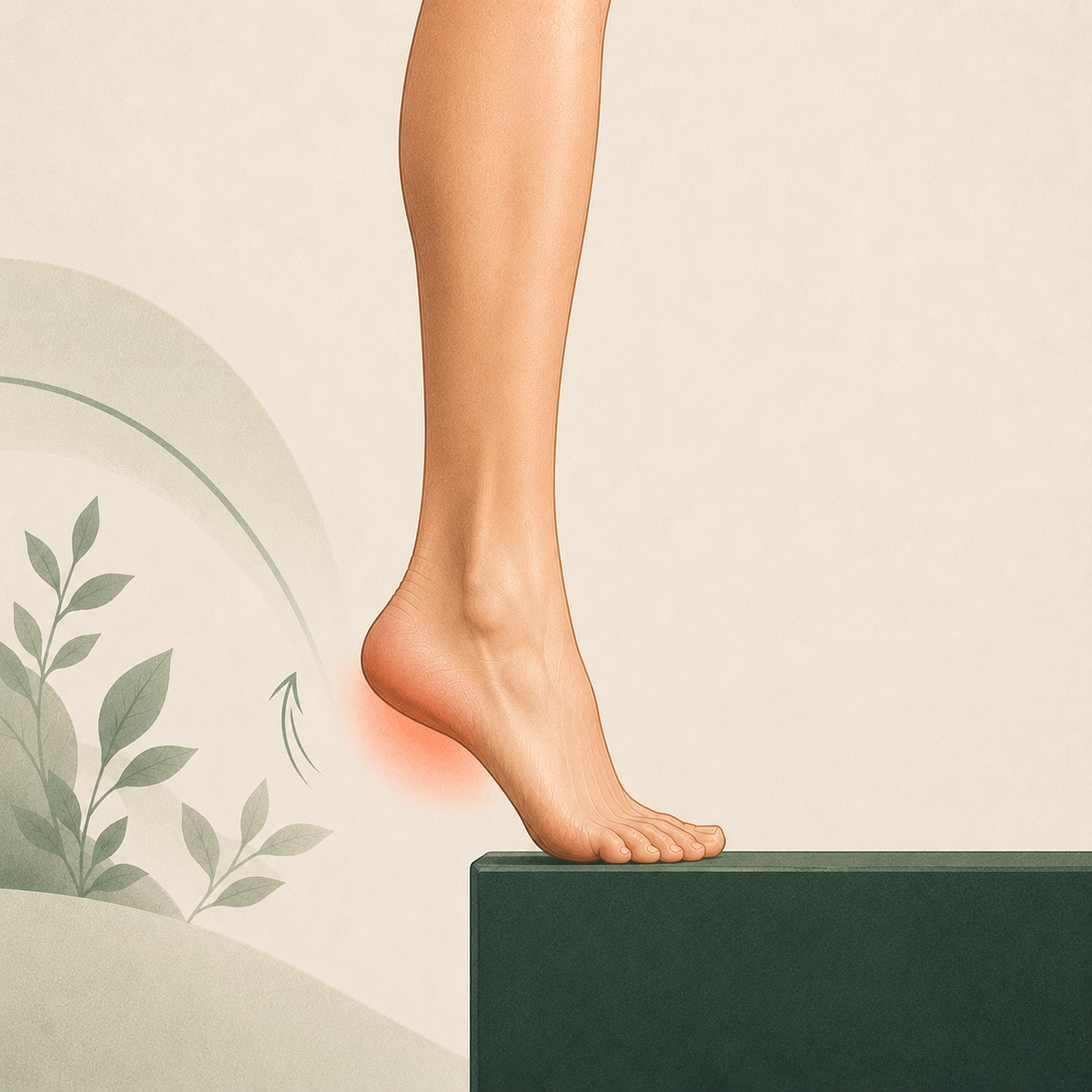
Pain is often sharpest with the first few steps after waking or after sitting for a while.
A clearer next step for stubborn heel pain
A plain-language guide to common plantar fasciitis patterns, the things that helped me, and a research-informed slow heel-raise routine.
This site shares personal experience and general education. It cannot tell you what is causing your pain.
Understand the pattern
Plantar fasciitis is a common cause of pain near the bottom of the heel. These clues can fit—but other problems can feel similar.
Pain is often sharpest with the first few steps after waking or after sitting for a while.
Tenderness commonly sits near the inside-bottom of the heel and may extend toward the arch.
Long standing, a jump in running or walking, hard surfaces, or unsupportive footwear can aggravate symptoms.
Possible contributors
Seek prompt medical care for major swelling, redness or warmth, fever, numbness, an injury you cannot bear weight on, pain at rest/night, or symptoms that are worsening. Sudden calf swelling or shortness of breath can be an emergency.
Personal experience, not a prescription
These are items I used alongside gradual exercise. They are not guaranteed treatments, and what suited my feet may not suit yours.
Cushioned arch support
A full-length, semi-rigid insole. This is one of the everyday supports that helped me feel more comfortable in shoes.
View on Amazon (paid link) ↗High-arch support
A firmer, high-profile insert. Foot shape and shoes differ, so fit matters more than any one brand.
View on Amazon (paid link) ↗Overnight support
This is the brace I used to keep my foot gently flexed instead of relaxing flat overnight. That position keeps the plantar fascia and calf–Achilles complex from tightening as much, which may make the first steps in the morning less irritating. It helped me, but comfort and fit vary.
View on Amazon (paid link) ↗As an Amazon Associate I earn from qualifying purchases. If you buy through these links, I may receive a commission at no extra cost to you. These are items that helped me—not guaranteed treatments. Product claims belong to their manufacturers and sellers.
Why I made this
I went to several doctors for my heel pain. Most of the time, I left with another recommendation for insoles. Insoles helped with comfort, but the combination that made the real difference for me was wearing a night brace and sticking with slow, progressive heel raises.
The night brace is not fun to wear. Honestly, it sucks. The exercises can suck too. I kept doing both because they worked for me.
This site is my experience—not a promise that the same approach will work for everyone, and not a replacement for a proper diagnosis. I’ve included the research behind the exercise plan so you can read it for yourself and make an informed decision.
I do earn a small commission if you buy through the Amazon links. It costs you nothing extra, and I genuinely appreciate it. If you find something better, please let me know so I can make this guide more useful.
Best of luck,
Jake
Slow beats rushed
The studied routine uses slow progressive loading every other day. That is meaningfully less frequent than three times daily.
The exercise guidance is grounded in the 2015 randomized trial of progressive high-load heel raises and the 2023 clinical practice guideline. Evidence supports exercise as one option, not a universal cure. Last reviewed August 8, 2026.